
We have been practicing acupuncture for almost two decades now, yet the inquiry into how and why acupuncture works is ever unfolding. Our research, experience and countless observations tell us the following:
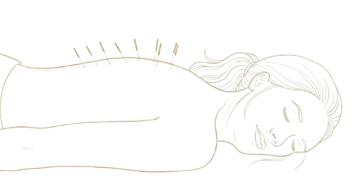
Traditional acupuncture applies needles to specific points along the body’s energy lines, or meridians, to activate the body’s natural healing response.
Acupuncture needles help to reach deep awareness of the complex parasympathetic system and connect this system to and through the tensions in the body.
Deep tensions play a significant role in hiding imbalances from the awareness of the body’s innate restorative and healing intelligence. The more tension and pressure is held in the body the more the loss of sensitivity and awareness of the emotional depth.
Energy sensitive people typically feel a nearly instant release as well as a deepening into the body the moment the first needle is inserted, while others ultimately report a deep sense of relaxation. Even the energy in the room becomes palpably more grounded as the body’s intelligence is finally able to reach places that have become inaccessible due to tensions.
Overview of Traditional Acupuncture
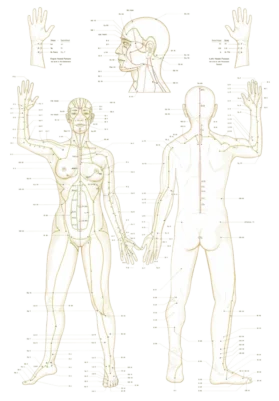
The exact age of acupuncture is debated, as its practice evolved over time, but it is generally considered to be over 2,000 years old, and likely much older. At its core, acupuncture revolves around the concept of Qi, a vital energy or life force, and the intricate network of channels, or meridians, through which this energy flows throughout the body.
The principles of acupuncture are deeply rooted in ancient Chinese philosophy, particularly the dualistic cosmic theory of Yin and Yang. The primary goal is to restore a harmonious balance between these opposing / complementing forces within the body, thereby allowing Qi to circulate freely.
Acupuncture needles play a crucial role in re-establishing communication among various complex bodily systems, including the nervous system, endocrine system, and lymphatic system.
