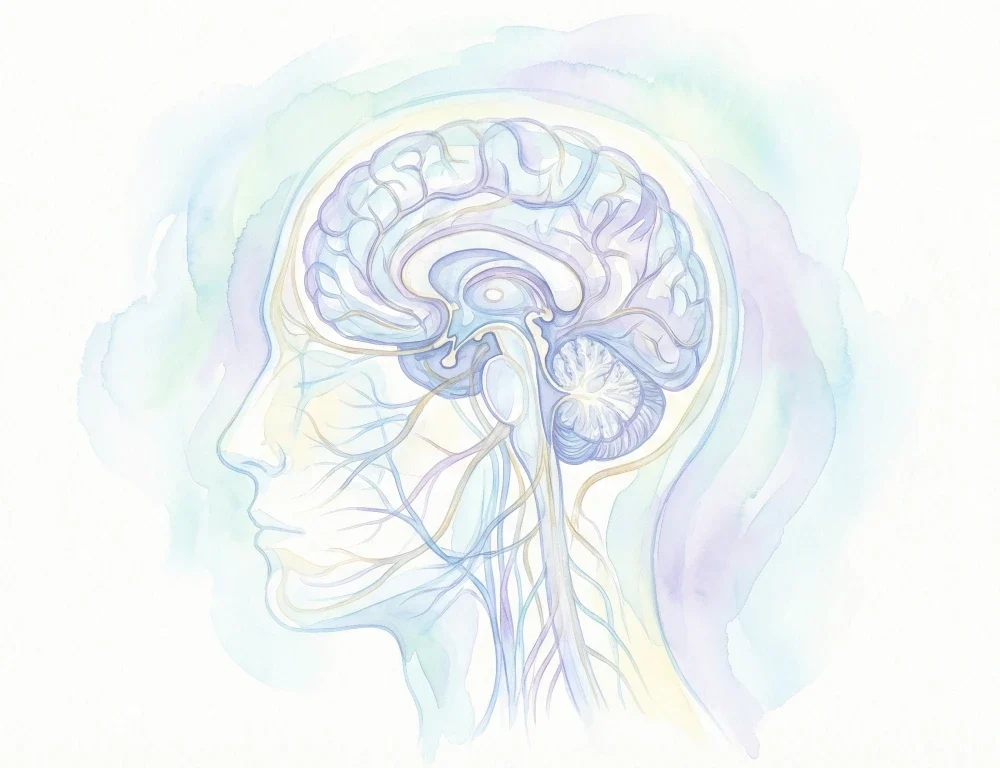
For those who suffer from migraines, the experience is often more than just a “bad headache.” It is a debilitating neurological event characterized by throbbing pain, light sensitivity, and nausea. In Traditional Chinese Medicine (TCM), a migraine is more than just a headache; it is a signal of a deep systemic imbalance. Whether the pain is a dull ache, a sharp “ice-pick” sensation, or accompanied by an aura, TCM views it as a disruption in the body’s energy field. By utilizing specific protocols to reset the nervous system and the energy body, we can move from simply “surviving” a migraine to clearing the patterns that cause them.
The TCM View: “Free Flow, No Pain”
In TCM, health is defined by the smooth flow of Qi (vital energy) and Blood throughout the body’s meridian system. Migraines are typically viewed through the lens of “Bi” (obstruction) or an imbalance of Internal Wind, Fire, or Phlegm.
The fundamental principle is: Tong ze bu tong, bu tong ze tong — “If there is free flow, there is no pain; if there is pain, there is no free flow.”
Common Patterns of Migraine in TCM
In the view of Traditional Chinese Medicine (TCM), a migraine is rarely just a localized vascular event. Instead, it is often the physical “scream” of a long-suppressed emotional or psychological tension. TCM operates on the principle that the mind and body are an inseparable continuum; therefore, chronic migraines are frequently the somatic manifestation of internalized conflict, stagnant growth, or unexpressed spirit.
TCM practitioners do not treat every migraine the same way. Treatment is tailored to specific “patterns”:
Liver Yang Rising: Often triggered by stress or anger. TCM practitioners look at a migraine as a “weather event” happening inside the body. The most common cause is Liver Yang Rising, which feels like a hot, rushing wind blowing upward into the head.The pain is usually sharp, located on the sides of the head (the Gallbladder meridian), and accompanied by irritability or dizziness.
The Gallbladder Connection: The Gallbladder meridian wraps around the sides of the head exactly where most migraines occur. When the Liver (the “General” of the body) becomes stressed or stagnant, it sends a surge of heat and energy up through the Gallbladder channel.
The Result: This “wind” causes the throbbing, light sensitivity, and nausea that define a migraine.
The Emotional Root: The Liver is responsible for the smooth flow of Qi and is associated with our sense of purpose and “vision.” When we feel thwarted, repressed, or stuck in a life situation that contradicts our true nature, Liver Qi Stagnates.
The Physical Result: This stagnant energy turns into “Heat” and eventually “Fire,” which rushes upward to the head. These migraines often strike along the sides of the temple (the Gallbladder meridian), manifesting as a sharp, pounding reminder of unresolved anger or frustration.
The Spleen and the “Weight of Worry”
The Emotional Root: The Spleen is the center of transformation and is linked to the intellect. Overthinking, obsessive worrying, and “digesting” the problems of others can weaken the Spleen.
The Physical Result: This leads to the accumulation of Internal Dampness. The resulting migraine feels heavy, like a wet towel wrapped around the brain, symbolizing the mental “fog” created by an overactive, anxious mind.
Blood Stagnation: Characterized by fixed, stabbing pain that is chronic and persistent. This often follows a history of long-term illness or injury.
Phlegm-Dampness: Usually involves a heavy, “wrapped” sensation in the head, often accompanied by “brain fog,” nausea, and a feeling of fullness in the chest.
Qi and Blood Deficiency: These migraines are often duller and occur after overexertion or during a menstrual cycle. They are accompanied by fatigue and paleness.
Primary TCM Modalities for Treatment
TCM utilizes a multi-pronged approach to reduce the frequency and intensity of migraines.
1. Acupuncture
Acupuncture is perhaps the most well-researched TCM tool for migraines. By inserting fine needles into specific points, practitioners aim to move stagnant Qi and trigger the body’s natural pain-relieving chemicals (endorphins).
Acupuncture points like Taichong (LV3) are used not just to lower blood pressure, but to “descend” the energy of a person who is living too much in their head. By grounding the Qi, the practitioner helps the patient move from a state of hyper-vigilance to a state of embodied presence.
How it feels: It’s like turning down the brightness and volume on the world. It stabilizes the brain’s chemistry, allowing the “Liver Fire” to cool and the “wind” to subside.
“Four gates” a combination of Hegu (LI4,) and Taichong (LV3,) is the most common and powerful combination of acupuncture points used to move stagnant energy, relieving headaches, pain and stagnant emotional energy.
Key Points: Often include Tiaochong (LV3) on the foot to calm the Liver, or Fengchi (GB20) at the base of the skull to dispel “Wind.”
Clearing the “Dragons” – Internal and External Triggers
For many migraine sufferers, the pain is triggered by things outside (smells, weather, lights) or things inside (repressed emotions, trauma, stress). The Internal and External Dragon protocols are used to purge these specific influences.
Esoteric Acupuncture
The blueprint of the energy body serves as the essential architectural template upon which the physical self is constructed and maintained. According to TCM philosophy and the principles of Esoteric Acupuncture, health is not merely the absence of physical symptoms, but a state of alignment with this original, undistorted template. If we view the physical body as a house, the energy body is the master blueprint; when the blueprint contains errors or “static,” the physical structure eventually manifests those faults as chronic pain, migraines, or exhaustion.
By addressing this deeper layer, we move beyond the “ripples” of the disease and target the source of the disturbance itself. Healing the blueprint ensures that the physical nervous system is no longer receiving a faulty or hyper-reactive signal from the energy field, allowing the body to finally return to its intended state of harmony and balance.
2. Herbal Medicine
Customized herbal formulas are used to address the internal “environment.”
- Xiao Yao San: Frequently used for stress-induced migraines to soothe the Liver.
- Formulas such as Xiao Yao San (Free and Easy Wanderer) are legendary in TCM for their ability to “smooth the Liver.” Psychologically, this formula helps a person become more flexible and less reactive to life’s stressors, essentially “cooling” the emotional fire before it reaches the head.
- Chuan Xiong Cha Tiao San: Specifically designed for “Wind” headaches, often containing herbs that guide the medicine directly to the head.
Lifestyle and Preventive Care
TCM emphasizes that “the superior physician treats the disease before it arises.” To prevent migraines, practitioners often recommend:
| Trigger Factor | TCM Recommendation |
| Diet | Avoid “Heating” foods like spicy peppers, alcohol, and excessive caffeine. |
| Emotion | Practice Tai Chi or Qi Gong to regulate the Liver Qi and manage stress. |
| Sleep | Ensure rest before 11pm (the time associated with the Gallbladder/Liver meridians). |
| Massage | Massage the head along the meridians, from the front hair line to the back hair line, to help the flow of energy on the head. You can use the wooden comb with wide teeth. |
| Essential Oils | Using essential oils, especially peppermint essential oil to prevent or to treat the migraines |
Decoding the Location:
TCM practitioners look at where the pain sits to understand the psychological root of the attack:
- Vertex (Top of the Head): Often related to the Liver. Symbolically, this can represent a struggle with one’s connection to “Heaven” or higher authority—a feeling of being unsupported from above.
- Forehead (Yangming): Related to the Stomach and Spleen. This often correlates with “intellectual indigestion”—taking in more information or responsibility than one can effectively process.
- Occiput (Base of Skull): Related to the Bladder meridian. Psychosomatically, this area is where we carry the weight of our ancestry and the “fright/flight” response. It represents a lack of boundary or a feeling of being hunted by one’s responsibilities.
The Role of “Shen” (Spirit)
Ultimately, TCM seeks to calm the Shen—the spirit that resides in the Heart. When the Shen is disturbed by trauma or chronic stress, the “Internal Wind” rises. Practices like Qi Gong or Meditation are prescribed alongside needles to help the patient recognize the emotional triggers—the exact moment a thought turns into a throb.
From Pain to Insight
By viewing a migraine as a psychosomatic signal rather than a biological malfunction, the healing process becomes a journey of self-discovery. The migraine is no longer an enemy to be suppressed, but a teacher pointing toward where the life-force has been restricted.
Unlike many conventional treatments that act as a “bandage” for the pain, TCM aims for long-term regulation. Many patients find that while the pain relief might take longer to achieve initially compared to a pill, the frequency and the intensity of attacks drops significantly over time because the root cause – stress, digestive issues, or hormonal imbalance—is being addressed.